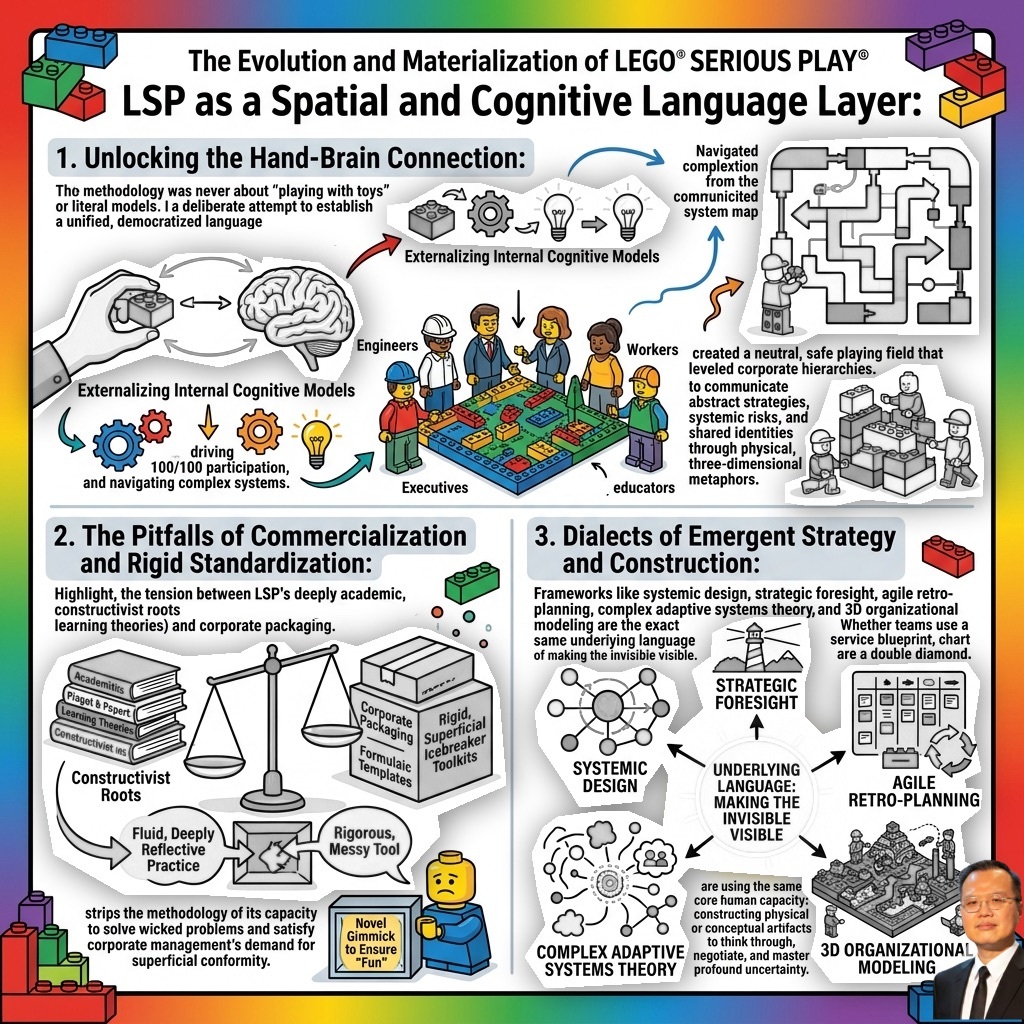
The Evolution and Materialization of LEGO® SERIOUS PLAY®
The evolution of the LEGO® SERIOUS PLAY® methodology reveals that it was never about “playing with toys,” but rather about establishing a radical, three-dimensional language layer for 100/100 participation, unlocking the hand-brain connection, and externalizing complex cognitive models across corporate hierarchies. However, much like Design Thinking before it, the true power of this constructivist approach faces the ongoing pitfall of productization—where a fluid, messy tool for navigating real-time strategy and emergence risks being over-packaged into rigid, superficial icebreaker toolkits to satisfy a corporate demand for predictable outcomes. Ultimately, whether we use strategic foresight, agile modeling, or 3D metaphorical landscapes, these frameworks are not competing methodologies but different dialects of the exact same underlying language designed to help leaders construct artifacts, navigate uncertainty, and make the invisible visible.
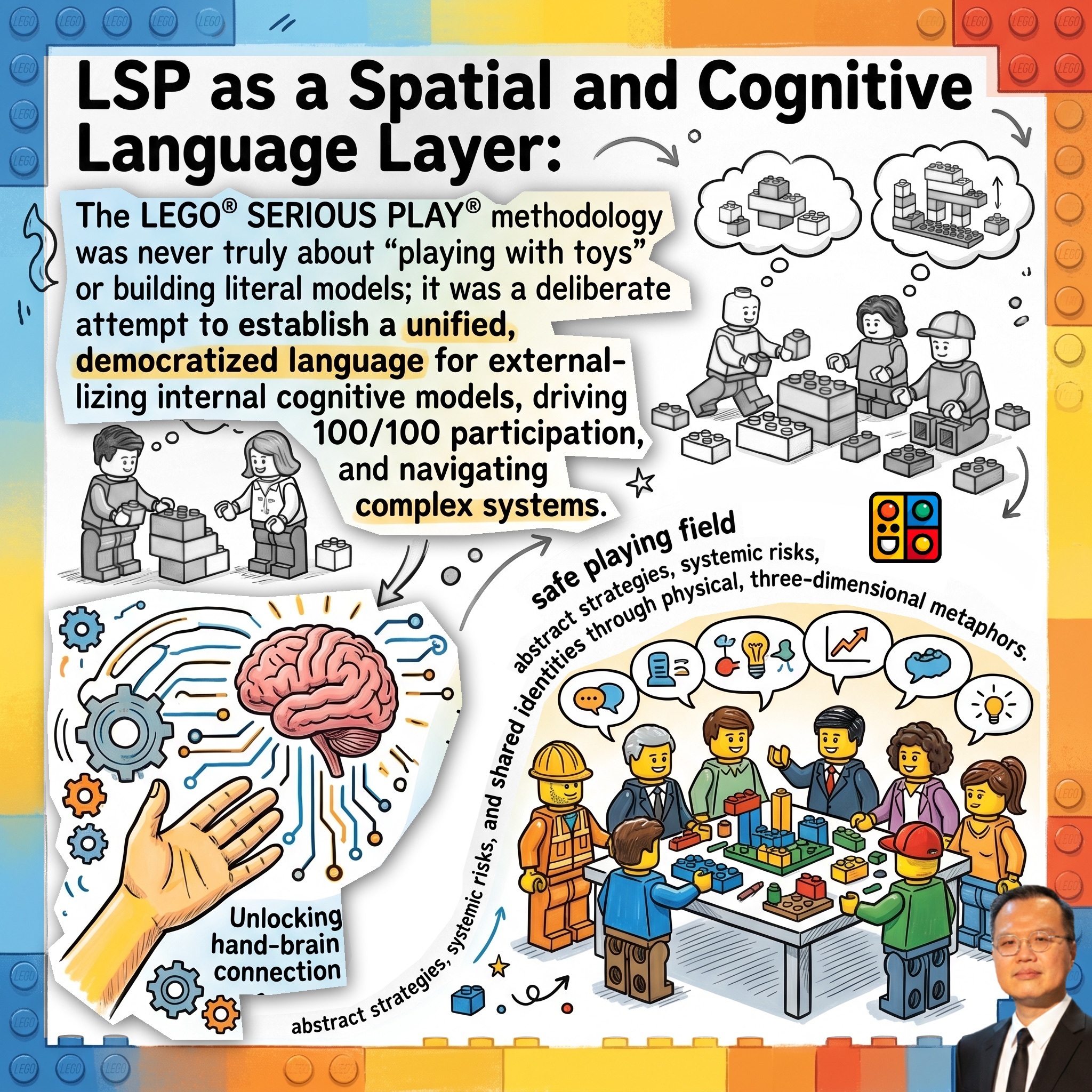
- LSP as a Spatial and Cognitive Language Layer: The LEGO® SERIOUS PLAY® methodology was never truly about “playing with toys” or building literal models; it was a deliberate attempt to establish a unified, democratized language for externalizing internal cognitive models, driving 100/100 participation, and navigating complex systems. By unlocking the hand-brain connection, it created a neutral, safe playing field that leveled corporate hierarchies. This shared vocabulary allowed engineers, executives, frontline workers, and educators to communicate abstract strategies, systemic risks, and shared identities through physical, three-dimensional metaphors.
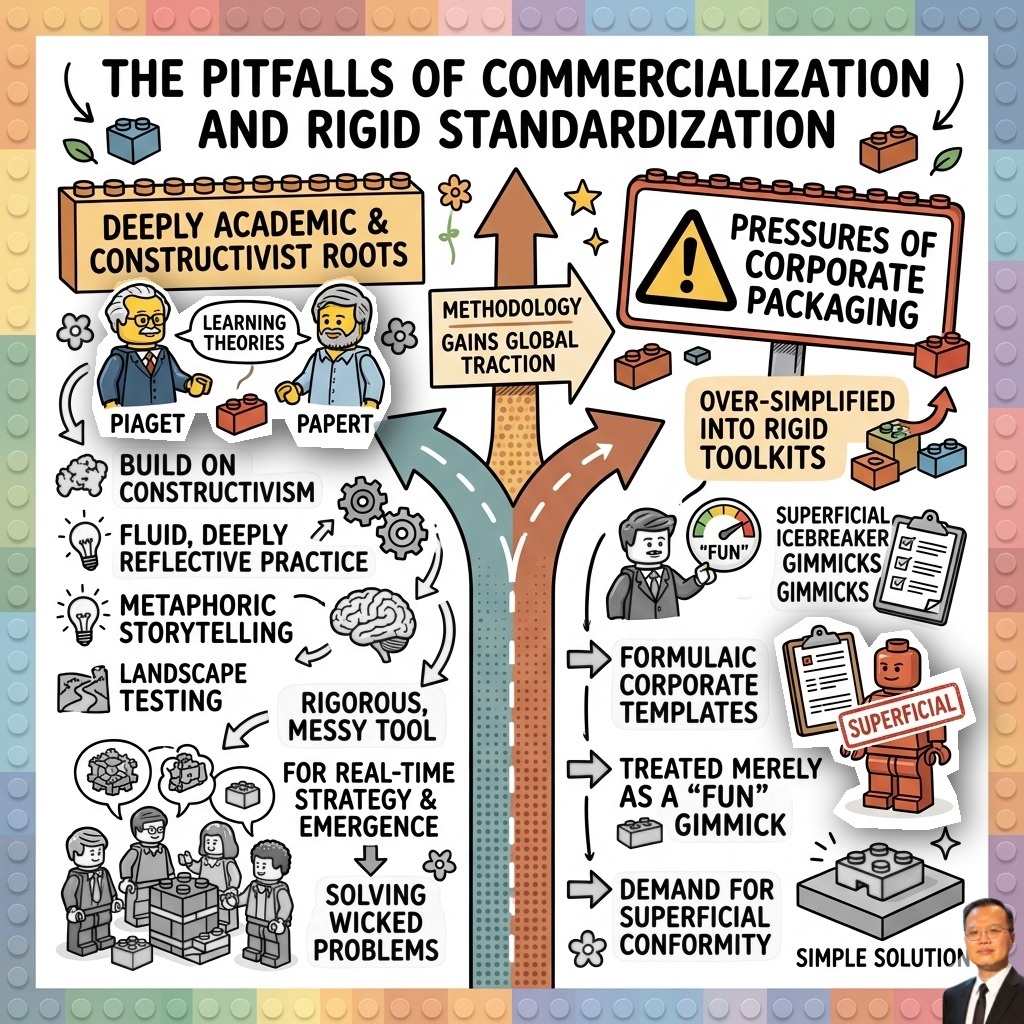
- The Pitfalls of Commercialization and Rigid Standardization: As the methodology gained global traction, the movement faced a distinct tension between its deeply academic, constructivist roots—built on Piaget and Papert’s learning theories—and the pressures of corporate packaging. The fluid, deeply reflective practice of building, metaphoric storytelling, and landscape testing occasionally risks being over-simplified into rigid, superficial icebreaker toolkits or formulaic corporate templates. When LSP is treated merely as a novel gimmick to ensure “fun” rather than a rigorous, messy tool for real-time strategy and emergence, it strips the methodology of its capacity to solve wicked problems and satisfy corporate management’s demand for superficial conformity.
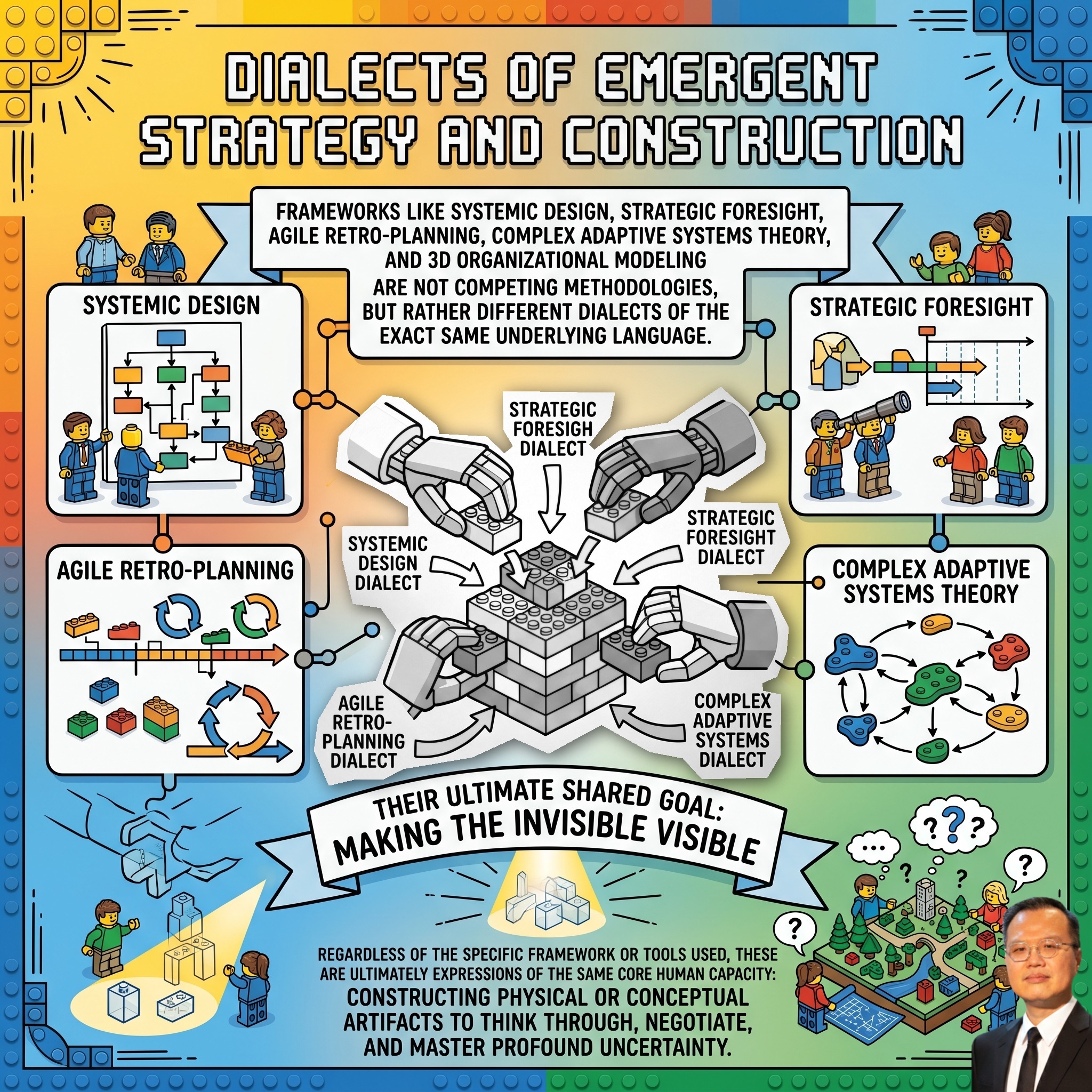
- Dialects of Emergent Strategy and Construction: Frameworks like systemic design, strategic foresight, agile retro-planning, complex adaptive systems theory, and 3D organizational modeling are not competing methodologies, but rather different dialects of the exact same underlying language of making the invisible visible. Whether a team is mapping a service blueprint, charting a double diamond, or building a 3D LEGO landscape of an organization’s internal and external agents, they are ultimately using the same core human capacity: constructing physical or conceptual artifacts to think through, negotiate, and master profound uncertainty.