Gartner Culture of Innovation Model
“Only 13.3% of R&D staff view their work environment as truly innovative. The disconnect between leaders’ messages and the reality experienced by staff erodes engagement and stifles creativity.”
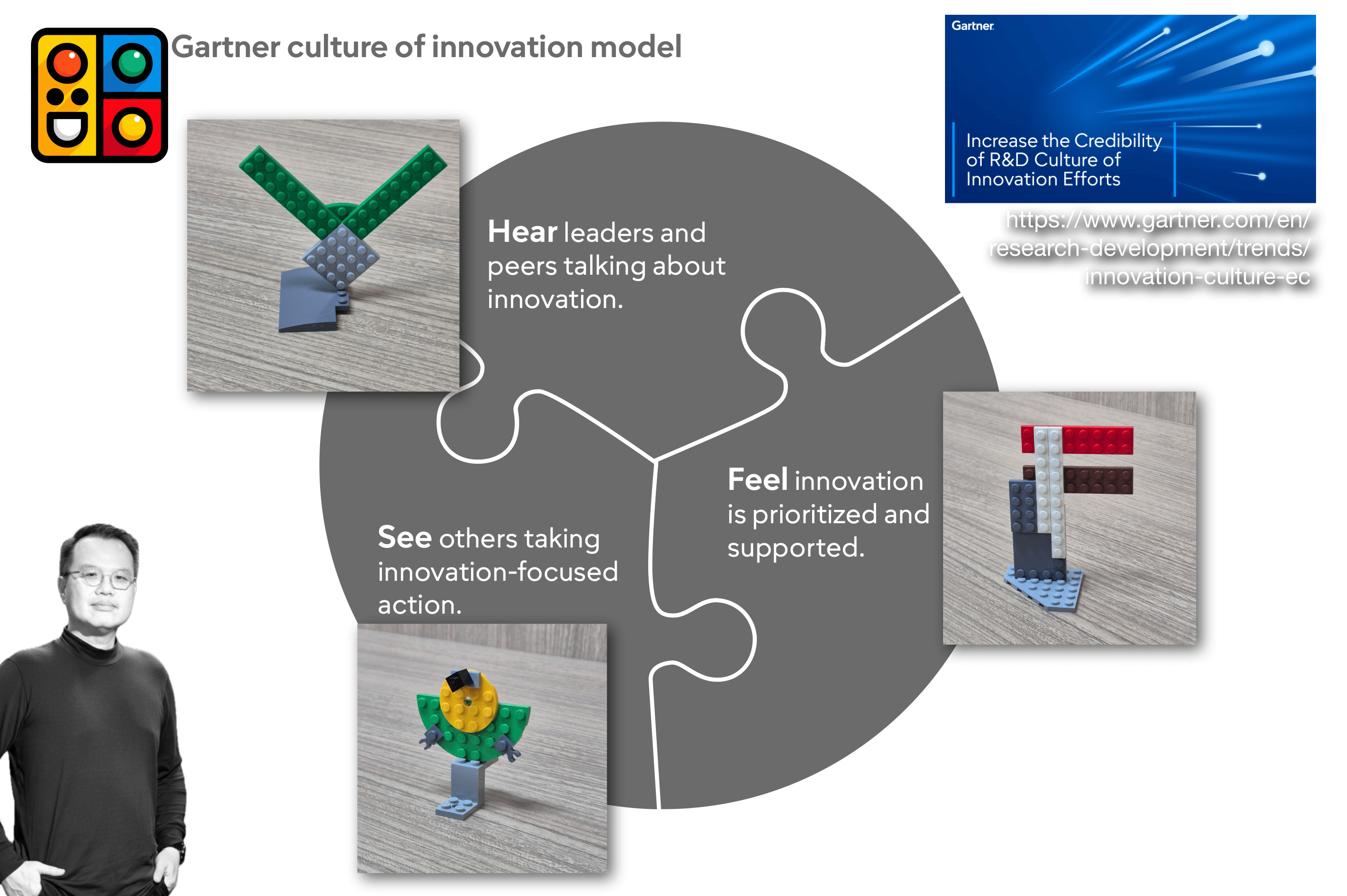
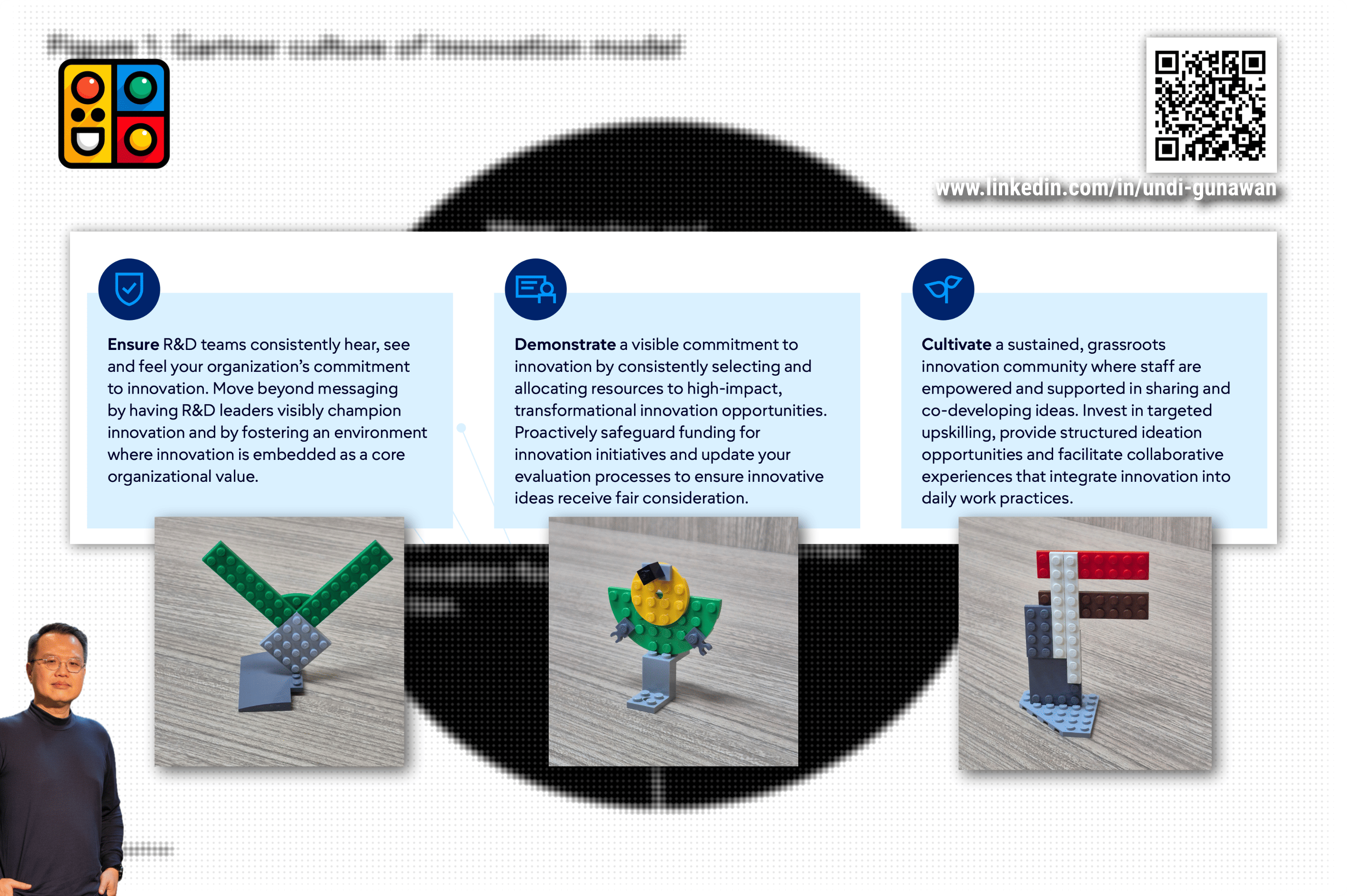
The organizational analysis of current Research and Development (R&D) environments reveals a severe structural disconnect in how innovation is perceived and executed. According to baseline data, only 13.3% of R&D staff view their work environment as truly innovative. While corporate messaging frequently prioritizes innovation, a deep disparity remains between executive rhetoric and the tangible reality experienced by workforce teams. This executive report synthesizes the workshop findings on how organizations can bridge this gap by transitioning from a purely vocal model to a deeply collaborative, experiential framework utilizing the LEGO® SERIOUS PLAY® (LSP) methodology.
The Golden Threads #
- The Rhetoric-Action Disconnect: Corporate leadership consistently relies on superficial signaling (“Hearing” innovation), which actively erodes employee engagement and trust when unsupported by resource allocation.
- The GenAI Competency Shift: The rapid adoption of Generative AI tools threatens to automate incremental tasks and inadvertently marginalize human-centric capabilities like collective creativity, structured ideation, and collaborative problem-solving.
- Artifact Short-Sightedness: Traditional high-profile innovation events (e.g., hackathons or ideation contests) function as “black boxes” that focus too heavily on initial concept collection while failing to provide long-term, transparent feedback or development mechanisms.
- Kinesthetic and Spatial Alignment: True organizational alignment and psychological safety cannot be achieved through passive listening; they require structured, tactile, and multidimensional communication channels to unlock embedded knowledge.
Strategic Implications #
Organizations must fundamentally shift their strategic portfolios from short-term, low-risk incremental investments to safeguarded, transformational innovation opportunities. To achieve a credible culture of innovation, leadership must move beyond top-down messaging and embed systemic mechanisms where employees can visually track investments and tangibly feel sustained peer-driven momentum. Failing to establish this environment will accelerate employee skepticism, suppress breakthrough creativity, and increase turnover among highly skilled R&D talent.
Critical Turning Points #
The primary breakthrough occurred when comparing the traditional, sporadic hackathon model against the continuous LSP framework. The participants recognized that a single, high-profile design event operates as an isolated incident. In contrast, embedding regular LSP workshops directly into monthly planning cycles normalizes the collaborative development of concepts. This structural shift explicitly moves the organization out of superficial messaging and embeds innovation firmly within the daily workplace culture.
references:
Gartner’s R&D Culture of Innovation report