Béla Barényi and Inversion Thinking (to overcome decision paralysis)
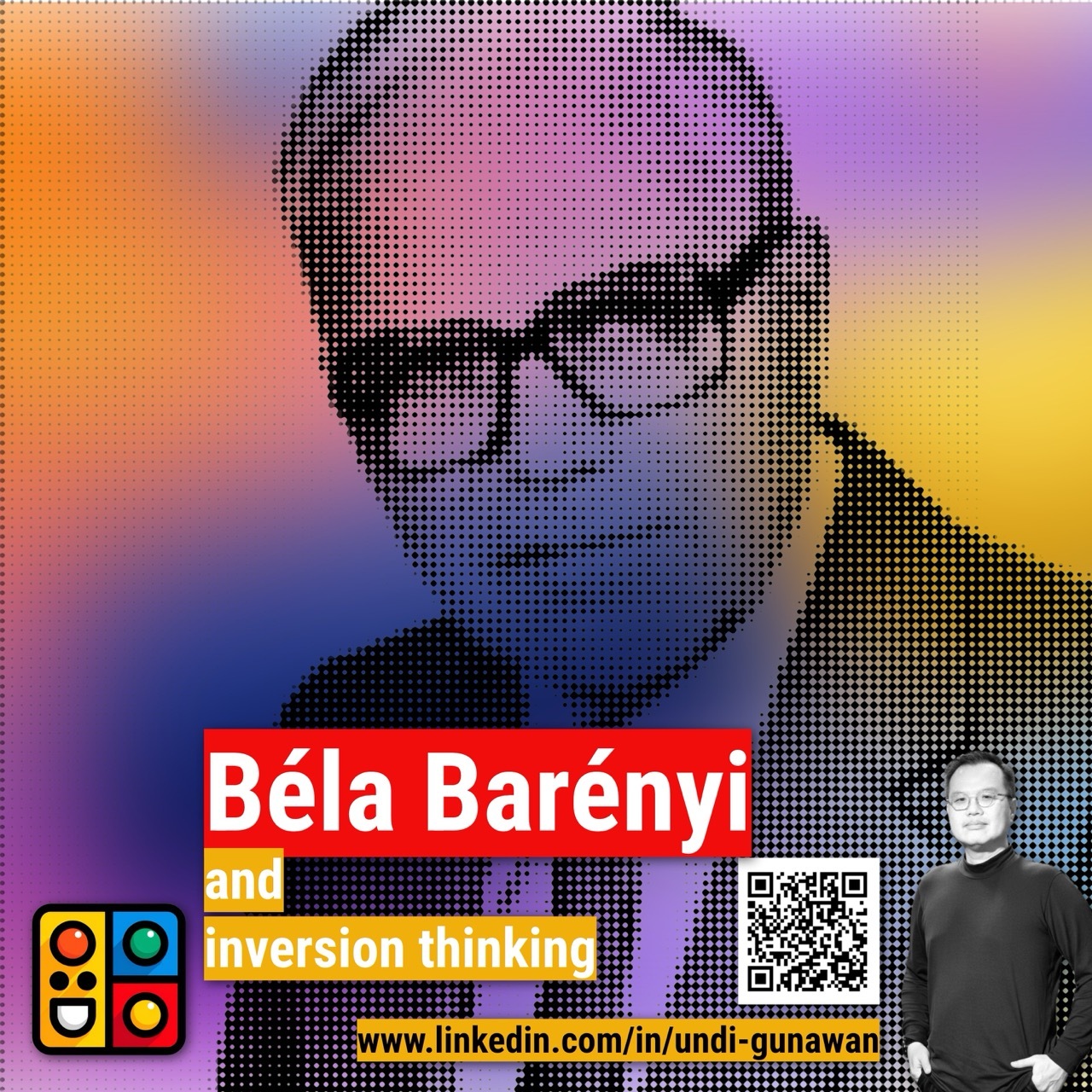
Instead of asking what would make something succeed, ask what would reliably make it fail, and then completely remove those things.
In the 1950s, automobile engineers believed that building a rigid, unbreakable car frame was the key to keeping passengers safe in a crash. They were fatally wrong.
For decades, the entire industry asked a single question: how do we make a car that can withstand an impact? This led them to build cars like tanks. The problem was that when a rigid car hits a wall, it stops instantly. The human body inside that rigid car also stops instantly, with devastating results.
Bella Barenyi, an engineer at Mercedes-Benz, decided to flip the problem completely. He stopped asking what would make the car safer. Instead, he asked what was actually causing the fatalities.
He realized that the sudden drop from full speed to zero was the killer. The strength the industry was so proud of was exactly what was making cars lethal. Barenyi invented the crumple zone. He designed the front and rear of the car to purposefully break and fold upon impact, stretching the crash out over an extra fraction of a second. That tiny delay slowed the body down gradually, saving countless lives.
The question of how to successfully accomplish a goal is incredibly vague. Because it is so large, it shatters into a thousand smaller potential answers. When you have a thousand different solutions, you inevitably end up with decision paralysis. You stand still because you are terrified of stepping in the wrong direction.
The people who successfully escape this infinite loop of possibility do so by flipping their perspective completely. They use a thinking tool known as inversion.
Inversion means looking at a problem from the opposite end. Instead of starting at your current position and working forward toward an intimidating goal, you start at the other end and work backward. You either start from the exact failure you want to avoid, or you start from the ultimate success you want to achieve, and you map the route in reverse.
More Examples #
Consider a group of kids trying to open a summer lemonade stand. If they try to figure out everything required to make the stand a massive success, they will quickly become overwhelmed. They have to worry about the perfect recipe, the optimal pricing strategy, the best marketing, and the perfect location. The list of requirements is endless, and they might never even open for business.
If they invert the problem, they ask a much easier question: what would reliably guarantee that this lemonade stand fails?
The answers are obvious. Setting up on a street where nobody walks by will guarantee failure. Running out of cups will guarantee failure. Charging twenty dollars a cup will guarantee failure. Picking a day with a severe thunderstorm will guarantee failure. If the kids simply avoid those four specific failure points, the lemonade stand will mostly work out on its own.
There are countless ways for something to go right, and most of them depend on variables you cannot control, like timing and luck. But the ways for an endeavor to go wrong tend to be universal.
The second way to use inversion is to fix the exact outcome you want as already true, before you have any idea how you are going to reach it.
When Amazon develops a new product, they do not start by writing code. The team writes a press release for the finished product as if it has already launched to massive acclaim. They write out the exact questions a customer would ask about it. They describe a success that does not exist yet, in painstaking detail. Only once that conceptual description holds together does the actual building begin.
They take the finished result as a fixed anchor point. The work then simply becomes whatever that specific result turns out to require. Instead of guessing what might sell well, they hold a concise blueprint of what their defined success physically depends on.
–
Key Takeaways #
First, avoid the trap of forward-facing decision paralysis. When you ask open-ended questions about how to succeed, you invite an overwhelming number of potential solutions. This abundance of choice freezes you in place. By flipping the question and approaching it from the end result, you drastically reduce your options to a manageable, actionable list.
Second, study failure instead of success. Success is chaotic and heavily reliant on luck, whereas failure is highly systematic and repetitive. Identify the exact behaviors, actions, or circumstances that will reliably ruin your relationships, health, or business projects. By simply mapping out those specific pitfalls and stubbornly avoiding them, you automatically position yourself for positive outcomes.
Third, reinterpret the obstacles in your path. Most people quit new endeavors during the clumsy beginner phase because they interpret their lack of immediate skill as a permanent dead end. When you invert your perspective, you recognize that quitting is just a predictable failure point. You learn to see early clumsiness not as a lack of talent, but as the mandatory, temporary cost of starting anything new.